
A Home of Wisdom for Tai Chi Lovers

Begin Your Taichi Journey Here

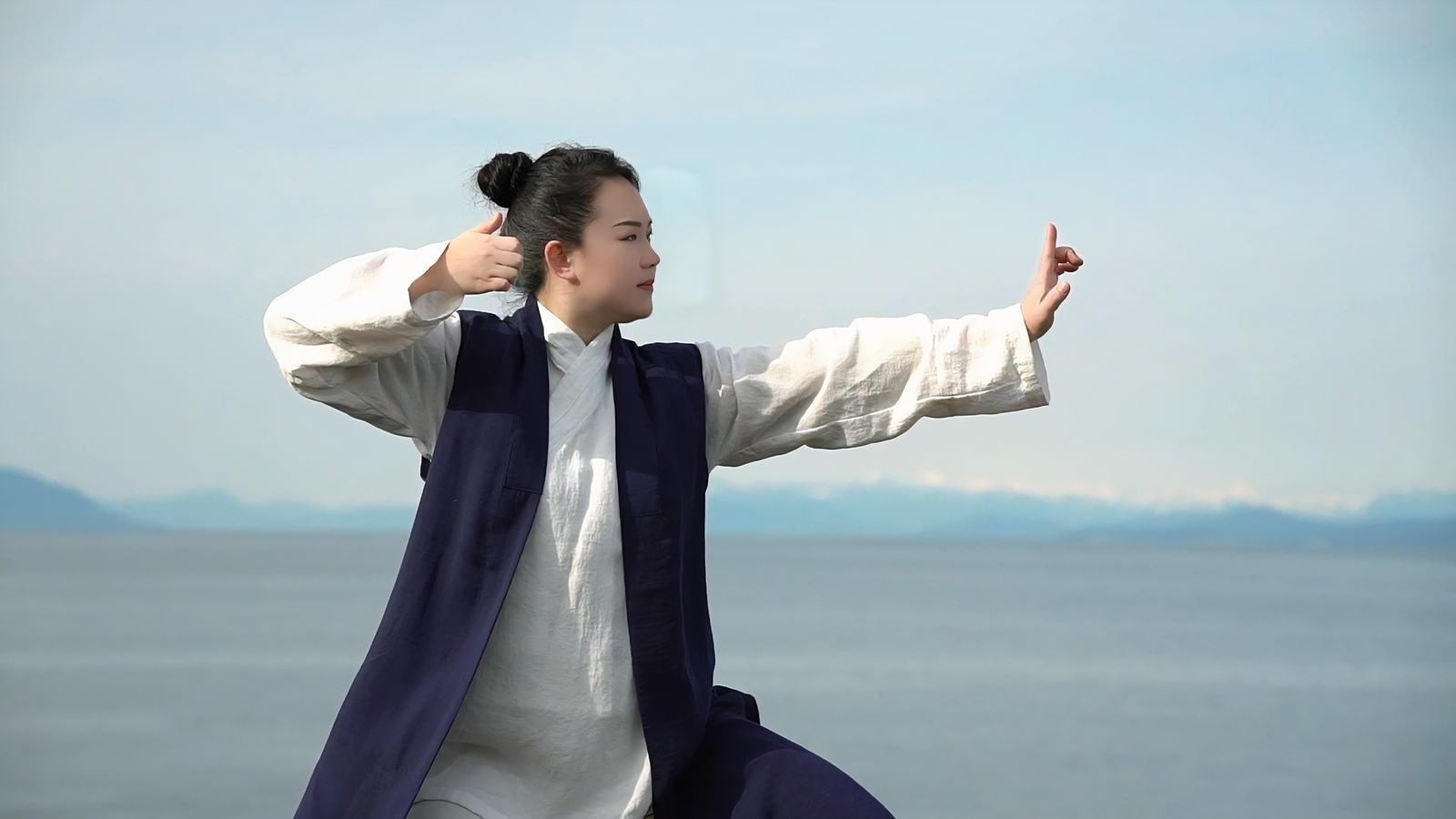
TaichiYun offers a clear, modern path into the essence of Taichi—softness, clarity, balance, and awareness.
Here, practice is not about forms, but about returning your body and mind to their most natural, harmonious state.

武当5m

Featured TaiChi Video Experience the Essence of Movement

Baduanjin Qigong (Eight Brocades) | Gentle Daily Practice for Mind & Body (English Guided)

Practice Baduanjin Qigong with this clear, English guided video.

Gentle movements, simple structure, and a complete routine —
designed for regular daily practice.

10,000+ members globally, with 20+ physical TaichiYun centers.

A Complete Library of Tai Chi & Wellness Wisdom — Find Clear Answers to Nearly All Your Questions

chatgpt image 2026年1月24日 20 44 29
Blog
YunJiezi

Where Is Emptiness and Fullness in Whole-Body Power?

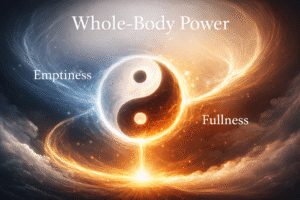
In Tai Chi, emptiness and fullness are not defined by external movement, but by yin–yang function within whole-body power. Whole-body power is the foundation, while emptiness and fullness are its expression. Once whole-body power is established, emptiness and fullness become clear: that which bears power is full, and that which expresses power is empty. In the preparatory posture, the arms lifting upward are empty, while the waist and dantian, which root and support the movement, are full. True lifting is not local arm effort, but a connected action through the back and spine, returning to the center. When this is understood, movement becomes rooted, stable, and free from floating or disorder.
Read More »
gemini generated image aiy168aiy168aiy1
awareness
YunJiezi

The Trap Many Tai Chi Beginners Fall Into

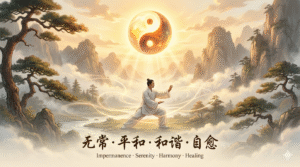
Tai Chi beginners often become confused by constantly changing bodily sensations. Warmth, coolness, soreness, and pressure come and go, and chasing explanations only leads to tension. Understanding impermanence is essential — sensations naturally arise and pass. Tai Chi practice is not about pursuing sensations, but about restoring harmony, balance, and the body’s natural healing ability. By observing without attachment and practicing with patience, stability and healing gradually unfold.

Read More »
chatgpt image 2026年1月9日 20 50 58
Blog
YunJiezi

Answering Students’ Confusion About Taichi Jin

This article addresses common confusion among Taichi practitioners regarding JIN—what it is, why it should be cultivated, and how it is properly developed. It clarifies that JIN is not a power created through training, but an inherent vitality present in all living beings. The real issue is not whether JIN exists, but whether it is integrated or scattered. By clearly distinguishing JIN from brute muscular force, the article explains why Taichi emphasizes internal cultivation rather than exertion. It outlines Yun Manor’s Taichi Gong path—developing awareness, recollecting scattered energy, and integrating JIN through calm, refined movement. Finally, it shows how understanding JIN forms the foundation of both genuine health cultivation and authentic martial practice.

Read More »
gemini generated image gshin5gshin5gshi
Blog
YunJiezi

The Dilemma of Traditional Chinese Medicine

Traditional Chinese Medicine (TCM) is largely excluded from modern institutional systems such as medical clearance, emergency care, and legal evaluation, yet it continues to demonstrate real effectiveness in everyday life. This contradiction does not stem from efficacy, but from fundamentally different medical and institutional logics. Modern medicine prioritizes standardization, reproducibility, and accountability, while TCM focuses on individualized, systemic balance. Misunderstanding these differences leads to both the dismissal and the mythologization of TCM. Only by recognizing their distinct roles can TCM be understood and applied rationally within modern society.

Read More »
chatgpt image 2026年1月1日 20 41 54
Blog
YunJiezi

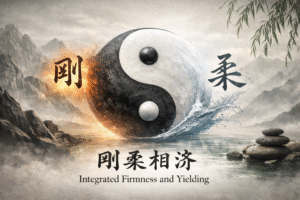
What Is Integrated Firmness and Yielding?

Integrated Firmness and Yielding does not describe alternating strength and softness, but a state in which two fundamental attributes—firmness and yielding—coexist within the same body at the same moment.
Firmness provides stability, resilience, and structural integrity, while yielding allows adaptability, receptivity, and continuity.
In Taichi, this integration results in a condition that is firm without rigidity, and yielding without weakness.
It reflects a unified, sustainable expression of vitality rather than opposing or switching qualities.

Read More »
chatgpt image 2025年12月30日 10 05 45
Blog
YunJiezi

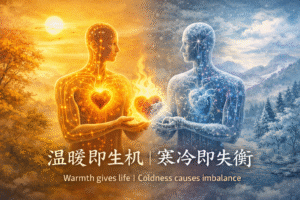
Temperature: The Simplest Principle of Wellness

The foundation of health lies not in supplementation, but in bodily warmth. When warmth is present, blood flows and meridians open; when warmth is lost, stagnation, dampness, and phlegm arise. True beneficial warmth is not fiery heat, but gentle vitality rooted in Yang Qi. Yang is not raised through forceful exercise, but through nourishing movement—slow, integrated, and non-depleting—exemplified by Taichi practice.

Read More »

About us

At TaichiYun, founded by Xiaoyun Master, our mission is to bring the timeless wisdom of Tai Chi, wellness, and meditation into everyday life.

武当4

To make Tai Chi a healing tool that anyone can truly use.
To bring Tai Chi beyond traditional routines and into your body, your daily life, and your inner world.

Our Mission:
Making Tai Chi an accessible healing tool for everyone—beyond forms, into your body, your life, and your heart.
Our Courses

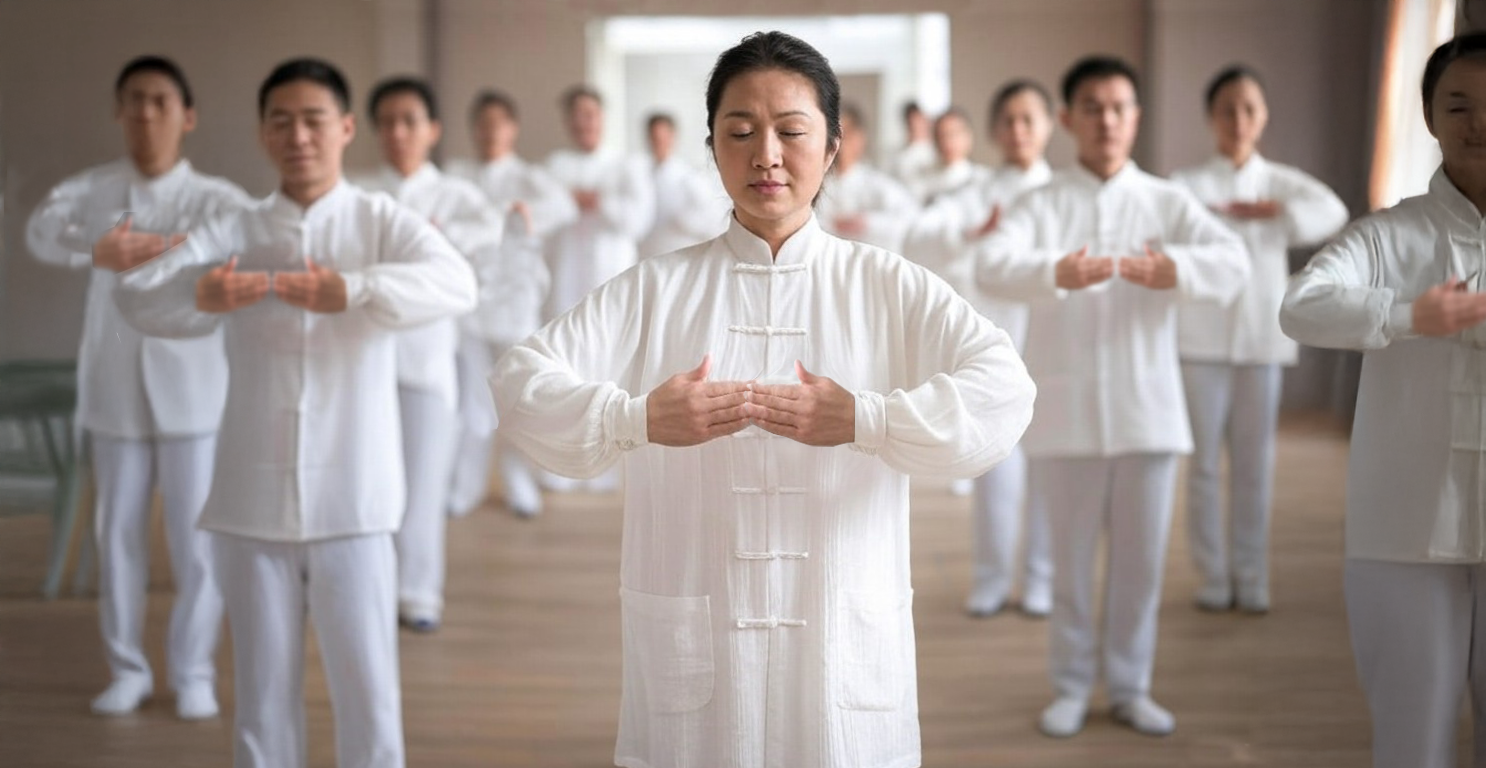
TaichiYun offers a complete mind-body training system combining Tai Chi, Baduanjin, Zhan Zhuang, and TaichiYun Walking—helping you grow deep strength through gentle practice.

gemini generated image 2nubl62nubl62nub
Tai Chi System Courses

Taichi Quan System Course

A beginner-friendly Tai Chi course that guides you step-by-step—from principles to movements, from relaxation to full routines. Accessible for everyone, anytime.

八段锦3
Baduanjin System Course

Baduanjin System Course

Baduanjin is a gentle and effective wellness practice made of eight movements that open the meridians, relax the body, and improve qi circulation. This course offers clear, easy-to-follow guidance to help you rebuild strength, balance, and overall well-being.

站桩
Standing Flow System Course

Standing Flow System Course

Standing Flow restores proper structure, gathers the mind inward, and prevents the body’s strength from scattering.
Through quiet standing, the body softens naturally and stability grows from within.
Ideal for reducing tension and enhancing balance and awareness.

芸走7
Taichi Yun Walking flow System Course

Taichi Walking Flow System Course

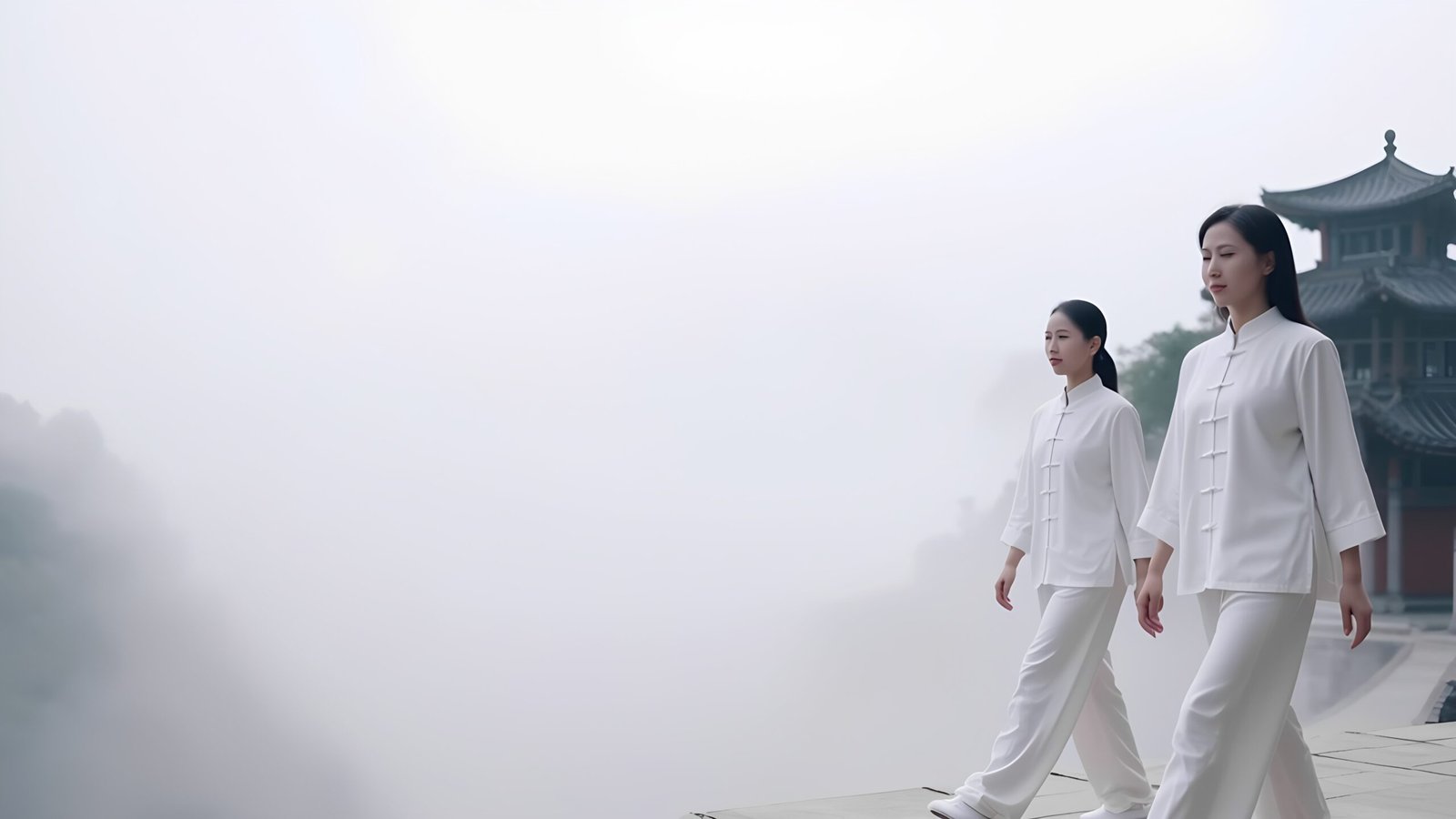
Taichi Yun Walking flow is a core foundational practice that embodies nearly all essential Taichi principles.
Through gentle, aligned walking, the body learns to stay integrated, stable, and softly gathered even in motion.
Often called “Taichi in walking,” it offers powerful therapeutic and rebalancing effects—ideal for reducing tension, restoring natural movement, and improving overall harmony.

Yun Jiezi, the Founder and Host of TaichiYun

Xiaoyun, founder of TaichiYun, teaches Tai Chi, standing meditation, wellness, and embodied awareness. She guides people to rediscover ease, stability, and inner balance through gentle yet profound practice.

colorful flat illustration instagram profile picture (1)
FAQ

Frequently asked questions


Many people don’t know how to relax not because they “can’t relax,”
but because the body has developed long-term tension patterns.
In Tai Chi, relaxation is not collapse — it’s lightness with support.
The more you try to relax, the tenser you become.
This is normal and simply means the body needs time to relearn safety.

For beginners, 10–15 minutes a day is enough.
Tai Chi progress doesn’t come from practicing longer,
but from consistent gentle nourishment.
Regular practice brings faster results than you might expect.

Absolutely.
Most of our courses are designed specifically for beginners —
starting from posture, breathing, loosening, and basic steps,
guiding you step by step to develop awareness and stability.

Online courses are ideal if your schedule is flexible or you like rewatching lessons.
In-person classes are better if you want direct correction and faster breakthroughs.
Many students combine both for the best experience.

Leg shaking isn’t bad —
it means your body is reorganizing its force patterns.
When old tension patterns loosen, shaking and mild soreness are normal.
As long as it’s not sharp pain, simply let the body adapt.

Yes.
Tai Chi’s principles — relaxation, slowness, steadiness, and smoothness —
directly regulate the nervous system.
With practice, breathing deepens, emotions stabilize,
and mental clarity improves naturally.